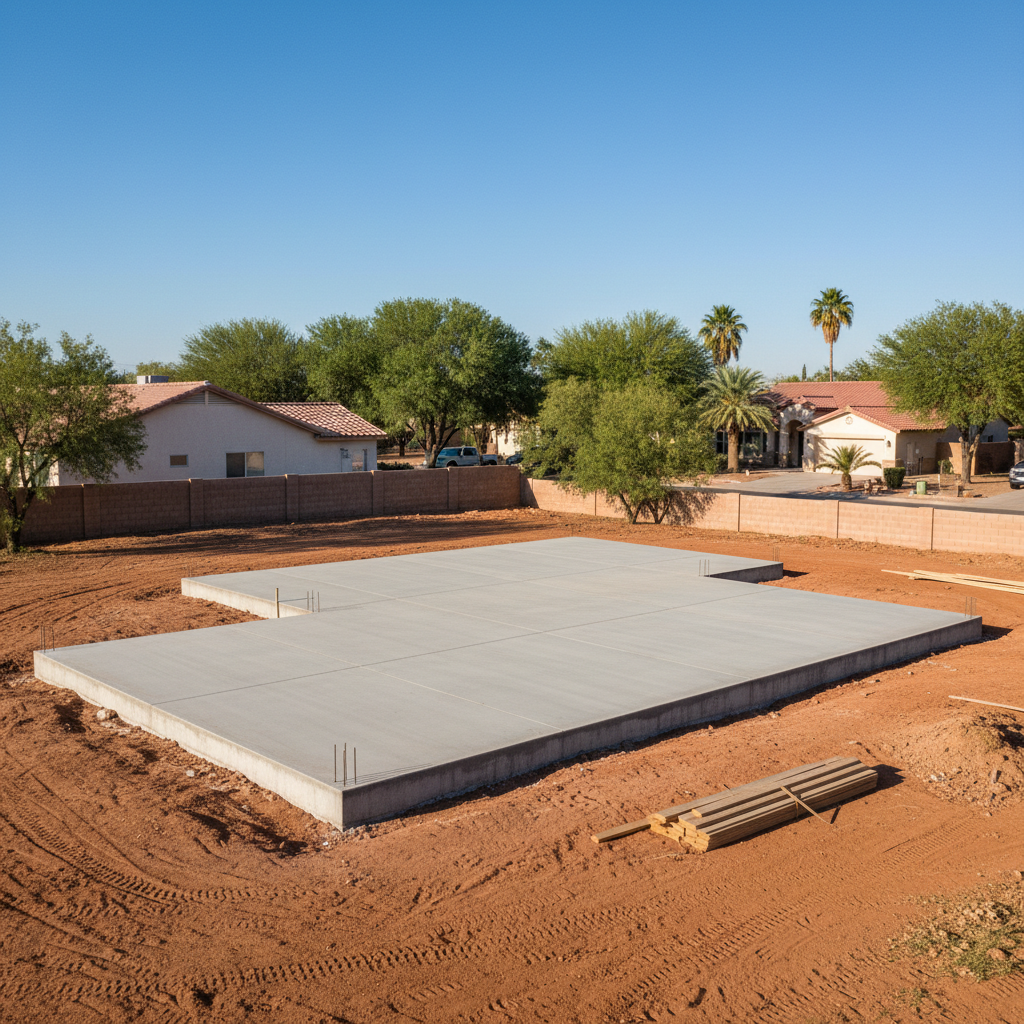
Ever wonder what's really holding your house up? Here in Coolidge, it's all about the foundation. And let me tell you, it's not a "one size fits all" kind of deal, especially with our unique desert conditions. I've seen a lot of foundations over the years, from older homes near the historic downtown area to the newer developments springing up on the outskirts, and there's a whole lot to consider.
Why Foundations Are Different Here in Coolidge
You might think concrete is concrete, right? Well, not exactly. The ground beneath your home, our local climate, and even the type of construction we typically see around here all play a huge role. For starters, we've got that caliche soil. If you've lived here long enough, you know what I'm talking about. It's that hard, cemented layer of soil that can be a real pain to dig through. But it also means you've got a pretty stable base once you get past the topsoil. The trick, of course, is knowing how to work *with* it, not against it.
Then there's our weather. We get those scorching summers, and then the monsoon season hits, bringing sudden, heavy downpours. That's a lot of moisture fluctuation for the ground around your foundation, and it can cause the soil to expand and contract. If your foundation isn't designed to handle those shifts, you're asking for trouble down the line – cracks, settling, even structural issues. We're not dealing with deep frost lines like folks up north, but we've certainly got our own challenges with extreme heat and sudden water. What a combination!
Common Foundation Types We See
Most homes around here, especially the newer ones, are built on slab-on-grade foundations. It's cost-effective and works well with our soil conditions when it's done right. Basically, the concrete slab is poured directly on the prepared ground. But "prepared ground" is the key phrase there. You can't just pour concrete on loose dirt and expect it to last. Proper compaction, moisture barriers, and rebar reinforcement are non-negotiable, plain and simple.
For some older homes or custom builds, you might see stem wall foundations. With these, a concrete wall extends from the footings to support the floor framing. They can offer a crawl space, which some folks prefer for easier access to plumbing and electrical. Each type has its own pros and cons, and what's best for your project really depends on the specific site and what you're trying to achieve.
When You Need Foundation Work Done
So, how do you know if your foundation needs attention? Keep an eye out for a few things:
- Cracks in your interior drywall, especially around door and window frames.
- Doors or windows that stick or don't close properly.
- Uneven or sloping floors.
- Cracks in the concrete slab itself, either inside your home or on exterior patios/driveways connected to the house.
- Gaps appearing between walls and ceilings or floors.
Now, not every crack means your house is falling down. Hairline cracks are pretty common. But if you see wider cracks, or cracks that are growing, or if you notice any of the other issues, it's time to get it checked out. Ignoring foundation problems is like ignoring a small leak in your roof – it only gets worse and more expensive, doesn't it?
Why Local Expertise Matters for Your Foundation
This isn't the kind of job you want to trust to just anyone. You need someone who understands Coolidge, who knows our soil, our climate, and our building codes. Someone who's seen what works and what doesn't work right here in our community. I've been doing this for a long time with Coolidge Concrete Paving, and I've learned that every foundation project is unique. We take the time to assess the specific conditions of your property, whether you're building a new home in the Ironwood Ranch area or adding a room to an existing property near the high school.
A good foundation is the bedrock of your home's stability and value. It's not just about pouring concrete; it's about engineering a solution that will stand strong for decades. Don't cut corners here. Get it done right the first time by folks who know the lay of the land.